Jackfield
The Free Bridge of Jackfield
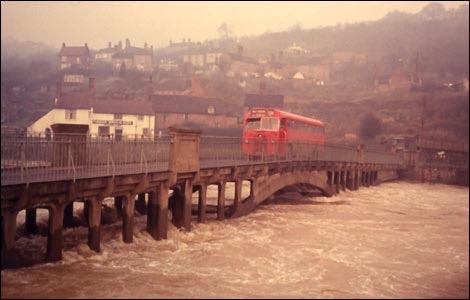
The Story of the Free Bridge and Jackfield Bridge
For centuries, the people of Jackfield, Coalbrookdale, Madeley and Broseley had only three options to cross the River Severn: the Iron Bridge, the Coalport Ferry, or a long detour to Bridgnorth. The Iron Bridge was a toll bridge until 1950. The Coalport Ferry was useless for carts or livestock. By the turn of the 20th century, locals were pressing for a toll-free crossing.
The campaign gained traction through public subscription and a remarkable legacy. Richard Whittingham Haynes (1820–1905), son of a Jackfield cooper who had emigrated to Montevideo, Uruguay, left $3,000 (about £642) in his will to Ironbridge. That bequest helped secure the project; the bridge was officially named the Haynes Memorial and Subscription Bridge — though most knew it simply as the Free Bridge.
Building an Experiment
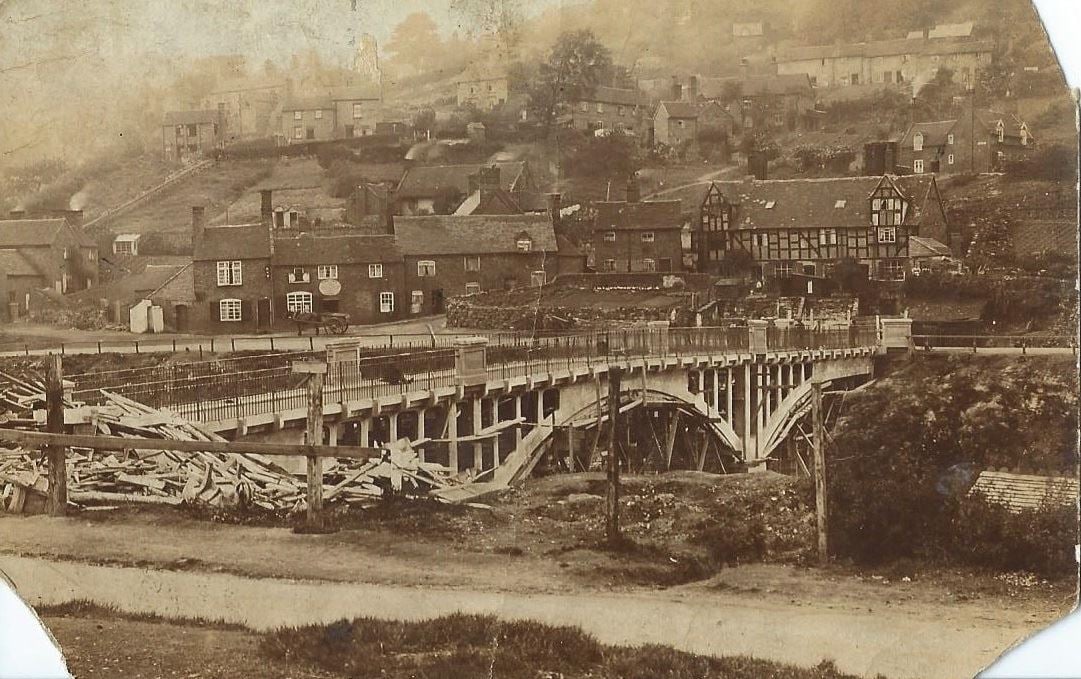
Work began in 1908. The bridge was an early experiment in ferro-concrete (reinforced concrete), pioneered by French engineer François Hennebique and introduced to Britain by Louis Mouchel. One of the first of its kind in Britain: total span 230 ft, open spandrel arches on eight piled foundations, built by the Liverpool Hennebique Company. Total cost: £1,536 (about £200,000 today).
The Opening — 26 June 1909
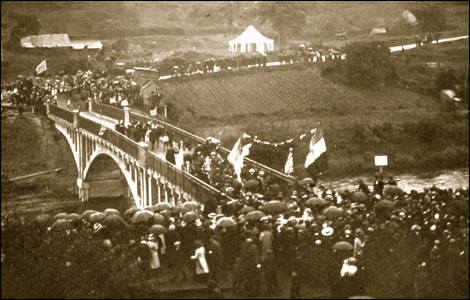
The bridge opened in pouring rain, but thousands turned out. It was officially opened by Thomas Parker, the renowned Coalbrookdale-born electrical engineer, and Alderman Ben Maddox JP, Mayor of Wenlock. Three local brass bands played. It had been tested on 29 April 1909 when a 14-ton steam roller was driven across.
Working Years and Decline
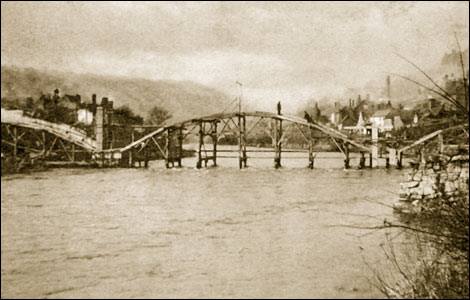
The Free Bridge quickly became part of daily life. The 1947 Severn flood was the worst then recorded. By the 1930s cracks were showing; in 1937 weight was restricted to 8 tons and 5 mph. Repairs by guniting were made in 1937, 1961 and 1969. By the 1980s the ferro-concrete was failing. In 1986 the bridge was declared unsafe; a single-lane Bailey bridge was erected on top of the old deck. HGVs faced a 14-mile detour.
Closure and Demolition — 1993
The bridge finally closed on 7 August 1993. The last crossing was theatrical: a horse-drawn cart from Blists Hill Museum, passengers in Edwardian costume, the Jackfield Band playing as it rattled across. Demolition began 30 August 1993. A section of the old concrete arch was preserved at Coalford where it still stands.
The New Jackfield Bridge
Work began October 1993 and lasted 16 months. The new bridge is an asymmetric cable-stay design, span 57 m, tower 30 m high. Cost: £1.8 million. Built by Alfred McAlpine Construction Ltd, designed by Gifford and Partners. Its profile soon earned it the nickname "the Batman Bridge". The official opening was 18 October 1994, when a 14-ton Wallis & Stevens steam roller made the first crossing — echoing 1909. The bridge won a British Construction Industry Award.
A Legacy of Freedom
The Free Bridge of 1909 was revolutionary — one of Britain's first reinforced concrete structures, funded by locals and a legacy from halfway across the world. To many, it remains simply "the Free Bridge", a symbol of local determination that the river should never again be a barrier.
More Gorge history
Read another story
Stay in the loop
More stories from the Gorge, straight to your inbox
A short weekly email with new history features, archive photographs and what's on across the Gorge.